

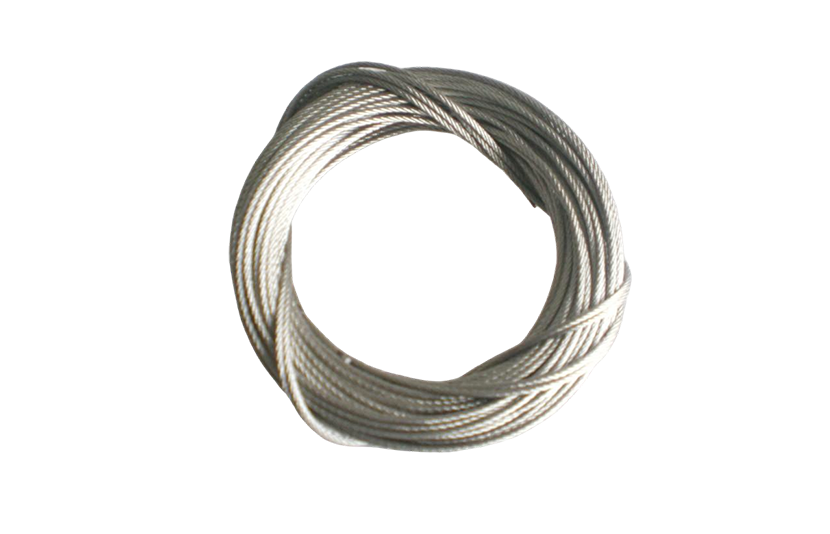
El Cable de acero es uno de los componentes más utilizados para elevar, izar, tirar, remolcar y soportar cargas en aplicaciones industriales.
Al seleccionar el cable de acero adecuado, dos de los factores técnicos más importantes son: fuerza de ruptura y
factor de seguridadEstos valores afectan directamente al rendimiento, la fiabilidad, la vida útil y la seguridad operativa general.
Esta guía explica fuerza de rotura del cable de acero, cálculo del factor de seguridad, estructuras comunes de cables de acero,
Consideraciones sobre la capacidad de carga y tablas de especificaciones típicas. Está escrito para compradores industriales, ingenieros, equipos de adquisiciones,
Responsables de mantenimiento y cualquier persona que necesite comprender claramente cómo evaluar los cables de acero para aplicaciones de elevación y aparejo.
Si está creando una página de categoría de producto, una publicación de blog industrial o una página de recursos técnicos, el siguiente contenido le proporcionará
Información estructurada, rica en palabras clave y optimizada para SEO sobre resistencia a la rotura del cable de acero,
carga de rotura mínima, límite de carga de trabajo, y factor de seguridad para cable de acero.
El cable de acero es un componente mecánico flexible hecho al retorcer varios alambres de acero juntos en hebras, y luego retorcer esas hebras.
alrededor de un núcleo central. El resultado es una cuerda de alta resistencia diseñada para transportar cargas pesadas, resistir la abrasión y funcionar de manera confiable en condiciones exigentes.
entornos. En comparación con la cuerda de fibra o la cuerda sintética, el cable de acero ofrece una resistencia superior al calor, alta resistencia a la tracción y gran resistencia.
estabilidad dimensional.
En uso industrial, el cable de acero se aplica comúnmente en grúas, ascensores, polipastos, equipos de minería, sistemas de suspensión, construcción,
operaciones marítimas, plataformas petrolíferas y de gas, sistemas de remolque y equipos de manipulación de materiales. Porque debe soportar cargas importantes en condiciones dinámicas.
condiciones de trabajo, entender sus fuerza de ruptura y factor de seguridad es esencial.
El fuerza de ruptura La resistencia de un cable de acero se refiere a la fuerza máxima que puede soportar antes de romperse. También se le llama
fuerza de rotura, carga mínima de rotura (MBL), o carga de rotura máxima dependiendo de la
Contexto y estándar utilizados.
En términos sencillos, la fuerza de rotura es el nivel de carga en el que el cable de acero ya no soporta la tensión de forma segura y comienza a fallar.
Este valor se determina normalmente mediante pruebas de laboratorio y está influenciado por varios factores, incluido el diámetro de la cuerda, la construcción,
Grado del acero, tipo de núcleo, dirección de la torsión, lubricación y calidad de fabricación.
Es importante tener en cuenta que la fuerza de ruptura es no la carga de trabajo recomendada. Nunca se debe usar un cable de acero en o
cerca de su fuerza de rotura en condiciones normales de servicio. En su lugar, los ingenieros aplican un factor de seguridad para determinar la capacidad de trabajo segura.
El factor de seguridad es la relación entre la fuerza de rotura de la cuerda y la carga de trabajo real. Se utiliza para garantizar que la
El cable de acero funciona con un margen de seguridad suficiente tanto en condiciones normales como imprevistas.
Un factor de seguridad más alto significa una mayor protección contra cargas de choque, desgaste, fatiga, sobrecarga y estrés inesperado. Un factor de seguridad más bajo
Puede que se permita en algunas aplicaciones de ingeniería controlada, pero generalmente requiere un diseño, una inspección y un funcionamiento muy precisos.
En términos prácticos, el factor de seguridad ayuda a definir la diferencia entre lo que una cuerda poder teóricamente resistir y lo que debería
de hecho llevar en servicio.
La fuerza de rotura y el factor de seguridad son fundamentales porque el cable de acero se utiliza a menudo en aplicaciones donde una falla puede causar daños al equipo.
Tiempos de inactividad, lesiones o riesgos graves para la seguridad. Una evaluación adecuada ayuda a los usuarios a evitar especificaciones insuficientes, sobrecargas y fallas prematuras de las cuerdas.
La fuerza de rotura de un cable de acero no está determinada únicamente por su diámetro. Varios factores estructurales y materiales influyen en la resistencia final.
clasificación de resistencia.
En general, un diámetro de cuerda mayor proporciona una mayor fuerza de rotura. Sin embargo, el diámetro por sí solo no define la resistencia porque la construcción y
El tipo de acero también afecta al rendimiento.
El cable de acero se puede construir en diferentes construcciones como 6x19, 6x36, 7x19, 8x19 y otras. El primer número indica el número de hebras,
y el segundo indica el número de cables en cada hebra. Las diferentes construcciones equilibran la flexibilidad, la resistencia a la abrasión, la vida útil a la fatiga,
y fuerza.
Los grados de acero de mayor resistencia a la tracción generalmente proporcionan una mayor resistencia a la rotura. Los grados comunes incluyen acero para arado mejorado y acero para arado extra mejorado,
dependiendo de las especificaciones y el estándar del fabricante.
El núcleo de un cable de acero puede ser de fibra (FC), de cable de acero independiente (IWRC) o de alambre trenzado. El IWRC a menudo mejora la resistencia al aplastamiento y
puede aumentar la resistencia efectiva en comparación con un núcleo de fibra.
La dirección y el tipo de tonelaje, como tonelaje regular derecho, tonelaje regular izquierdo o tonelaje lang, influyen en la flexibilidad, la resistencia a la rotación y
características de fatiga.
Los cables de acero galvanizado, brillante e inoxidable tienen diferentes ventajas en cuanto a resistencia a la corrosión y aplicaciones. Lubricación adecuada
Ayuda a reducir la fricción y el desgaste internos, lo que puede preservar la resistencia útil a lo largo del tiempo.
El cumplimiento de las normas reconocidas del sector garantiza métodos de ensayo uniformes y clasificaciones de resistencia más fiables.
Un punto común de confusión es la diferencia entre fuerza de ruptura y límite de carga de trabajo (WLL). Estos
Dos valores están relacionados, pero no son lo mismo.
| Término | Significado | Uso típico |
|---|---|---|
| Fuerza de rotura / Resistencia a la rotura | Carga máxima que la cuerda puede soportar antes de romperse. | Referencia de ingeniería y especificación del producto |
| Límite de carga de trabajo (WLL) | Carga máxima recomendada para un servicio normal. | Operación segura y planificación de carga |
| Factor de seguridad | Relación entre la fuerza de rotura y la carga de trabajo. | Selección del diseño y la aplicación de seguridad |
Ejemplo: Si un cable de acero tiene una fuerza de rotura de 10 000 kg y el factor de seguridad es 5:1, entonces el límite de carga de trabajo aproximado sería
2.000 kg. Esto no tiene en cuenta la carga dinámica, el desgaste, la flexión ni las condiciones ambientales, por lo que la selección en el mundo real siempre debe ser
Más conservador cuando sea necesario.
El factor de seguridad para un cable de acero se calcula mediante una fórmula sencilla:
Factor de seguridad = Fuerza de rotura ÷ Carga de trabajo
Por ejemplo, si un cable de acero tiene una fuerza de rotura de 12.000 kg y la carga que se levanta es de 2.000 kg:
Factor de seguridad = 12.000 ÷ 2.000 = 6
El resultado es un factor de seguridad de 6:1. Esto significa que la fuerza de rotura de la cuerda es seis veces superior a la carga de trabajo prevista.
En el diseño industrial real, la carga de trabajo puede requerir la consideración de factores adicionales como:
El factor de seguridad requerido depende de la aplicación, la norma aplicable, el entorno operativo y las regulaciones locales. Los valores que se muestran a continuación son:
Referencias generales de la industria y deben validarse conforme a la norma de aplicación pertinente.
| Solicitud | Rango típico del factor de seguridad | Notas |
|---|---|---|
| Elevación y izamiento | 5:1 a 7:1 | A menudo, los precios son más altos debido a las operaciones críticas para la seguridad. |
| Cable de grúa puente | 5:1 o superior | Puede variar según el diseño del sistema y el estándar. |
| Cable de acero para ascensor | 8:1 a 12:1 | Requisitos de seguridad estrictos comunes |
| Cable de sujeción / cable de soporte | 3:1 a 5:1 | Depende de la carga estática o semiestática. |
| Remolque / arrastre | 4:1 a 6:1 | Se deben tener en cuenta los cambios repentinos y bruscos de carga. |
| Minería e industria pesada | Varía según la normativa. | Debe cumplir con los requisitos de seguridad específicos del sitio. |
Estos valores son solo pautas generales. Confirme siempre el factor de seguridad requerido con la norma de ingeniería pertinente, el manual del equipo,
y condiciones de funcionamiento.
Las especificaciones de los cables de acero suelen describirse por diámetro, construcción, tipo de núcleo, torsión, acabado, grado de tracción y rotura mínima.
fuerza. La siguiente tabla proporciona un formato de referencia general para listados de productos comunes.
| Diámetro | Construcción | Tipo básico | Uso típico | Característica de resistencia general |
|---|---|---|---|---|
| 3 mm | 6x7 / 6x19 | FC / IWRC | Cable de control de tracción ligera | Fuerza de rotura baja a moderada |
| 5 mm | 6x19 / 6x36 | FC / IWRC | Pequeños elevadores, sistemas de barrera | Fuerza de frenado moderada |
| 8 mm | 6x19 / 7x19 | FC / IWRC | Cabrestante, izamiento, aparejo | Mayor fuerza de ruptura |
| 10 mm | 6x19 / 6x36 | IWRC | Uso auxiliar de grúa, remolque | Alta fuerza de ruptura |
| 12 mm | 6x36 / 8x19 | IWRC | Levantamiento de objetos pesados, izamiento | Fuerza de ruptura muy elevada |
| 16 mm | 6x36 / 18x7 | IWRC | Sistemas de elevación industrial | Fuerza de ruptura muy elevada |
| 20 mm | 6x36 / resistente a la rotación | IWRC | Grúas grandes, polipastos pesados | Fuerza de ruptura extremadamente alta |
Los valores reales de fuerza de rotura varían según el fabricante, el tipo de acero, la construcción y la norma. Consulte siempre la ficha técnica oficial.
para obtener valores exactos de carga mínima de rotura.
El cable de acero sigue siendo la opción preferida para muchas aplicaciones industriales porque combina resistencia, durabilidad y versatilidad.
Las diferentes construcciones de cuerdas ofrecen diferentes equilibrios de resistencia, flexibilidad y resistencia al desgaste. Seleccionar la construcción adecuada es una tarea importante.
Parte importante para optimizar la fuerza de frenado y el factor de seguridad.
| Construcción | Flexibilidad | Resistencia a la abrasión | Característica de resistencia | Uso común |
|---|---|---|---|---|
| 6x7 | Bajo | Alto | Fuerte pero rígido | Aplicaciones básicas de tracción y tensión |
| 6x19 | Medio | De medio a alto | Rendimiento equilibrado | Izaje y aparejo en general |
| 6x36 | Alto | Medio | Flexible y con buena resistencia | Servicio de elevación y grúas |
| 7x19 | Alto | Medio | Muy flexible | Cables de control y cabrestantes |
| 8x19 | Alto | Medio | Buena fuerza y flexibilidad | Sistemas de grúas y ascensores |
| Resistente a la rotación | Medio | Medio | Diseñado para minimizar la rotación bajo carga. | Operaciones de elevación profunda y con grúa |
Elegir el cable de acero adecuado requiere más que simplemente seleccionar el cable más grueso disponible. Una selección adecuada debe tener en cuenta lo siguiente:
aplicación, fuerza de rotura requerida, factor de seguridad, condiciones de flexión y entorno operativo.
Aunque un cable de acero tenga una alta fuerza de rotura nominal, su rendimiento efectivo en el campo puede verse reducido por las condiciones de funcionamiento y la instalación.
asuntos.
| Factor reductor | Efecto en el cable de acero | Resultado |
|---|---|---|
| Curvatura pronunciada | Aumenta el estrés interno y la fatiga. | Menor vida útil |
| Sobrecarga | Aumenta el riesgo de daños permanentes o fallos. | Margen de seguridad reducido |
| Lubricación deficiente | Aumenta la fricción entre los cables y los hilos. | Desgaste más rápido |
| Corrosión | Debilita los cables y reduce la sección transversal. | Menor resistencia a la rotura |
| Instalación incorrecta | Provoca torsión, deformación o carga desigual. | Riesgo de fallo prematuro |
| carga de choque | Crea picos de fuerza repentinos | El factor de seguridad puede ser insuficiente |
El uso seguro de los cables de acero depende de su correcta selección, instalación, inspección y reemplazo. Las siguientes buenas prácticas son ampliamente utilizadas.
aceptado en entornos industriales.
| Término | Definición |
|---|---|
| Carga mínima de rotura (MBL) | La fuerza mínima a la que se espera que la cuerda falle en condiciones de prueba estándar. |
| Límite de carga de trabajo (WLL) | La carga máxima permitida en condiciones normales de servicio. |
| Factor de seguridad | La relación entre la fuerza de rotura y la carga de trabajo. |
| Poner | La dirección y el patrón en que se entrelazan los cables y los hilos. |
| Centro | El elemento central de la cuerda que sostiene los hilos. |
| Resistencia a la rotación | La capacidad de una cuerda para resistir el giro bajo carga. |
La fuerza de rotura y el factor de seguridad del cable de acero son dos valores esenciales para un uso industrial seguro y eficiente. La fuerza de rotura define la
carga máxima que una cuerda puede soportar antes de romperse, mientras que el factor de seguridad define el margen entre ese límite y la carga de trabajo. Juntos,
Ayudan a los usuarios a seleccionar el cable de acero adecuado para aplicaciones de elevación, izamiento, remolque, aparejo y soporte de carga.
Ya sea que estés comparando Especificaciones del cable de acero, evaluando resistencia a la rotura del cable de acero, o
calculando el factor de seguridad para la cuerda de elevaciónUtilice siempre datos técnicos fiables y seleccione la cuerda adecuada para cada aplicación.
Una selección correcta reduce el riesgo, mejora el rendimiento y prolonga la vida útil.
Para contenido de ingeniería y adquisiciones industriales, palabras clave como fuerza de rotura del cable de acero,
factor de seguridad del cable de acero, carga de rotura mínima, límite de carga de trabajo,
Construcción con cable de acero, y Tabla de especificaciones de cables de acero son altamente relevantes para la visibilidad en las búsquedas y
claridad técnica.
```

 Teléfono fijo: +86-513-85100011
Teléfono: +86 13585223056
 Correo electrónico:hangtong@nthangtong.com
vicky@nthangtong.com
 Dirección: No. 508, Guangxing Road, ciudad de Baishan, condado de Bo'ai, ciudad de Jiaozuo, provincia de Henan
Copyright © Henan Suxiang Steel Cable Co., Ltd
Este sitio web utiliza cookies para garantizar que obtenga la mejor experiencia en nuestro sitio web.
 English
 한국어
한국어 العربية
 Tiếng Việt
 Filipino



 Teléfono
Comentario
(0)